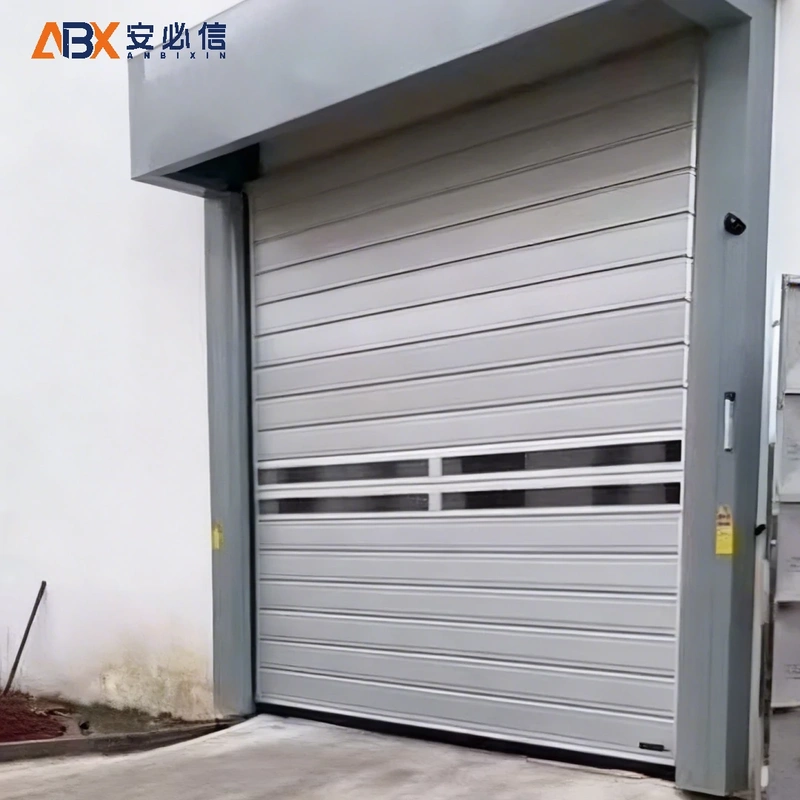
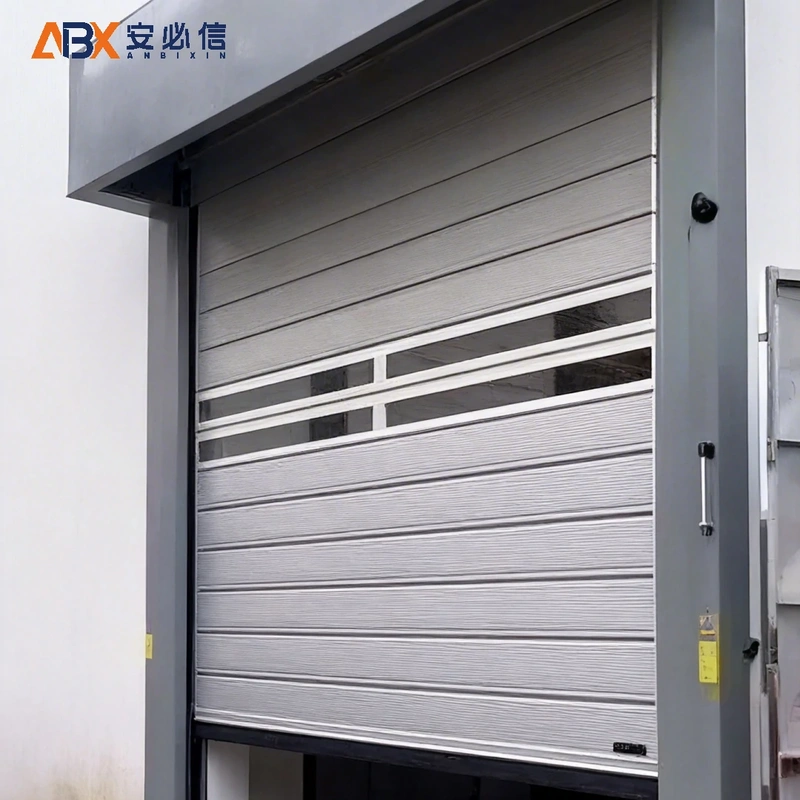
Aluminum High-Speed Door is a rigid high-speed door configuration. A rigid high-speed door is a powered industrial door built from rigid insulated slats that opens and closes at high speed, combining wind resistance, security and temperature separation at high-traffic openings.
High-Performance Industrial Aluminum Rapid Door
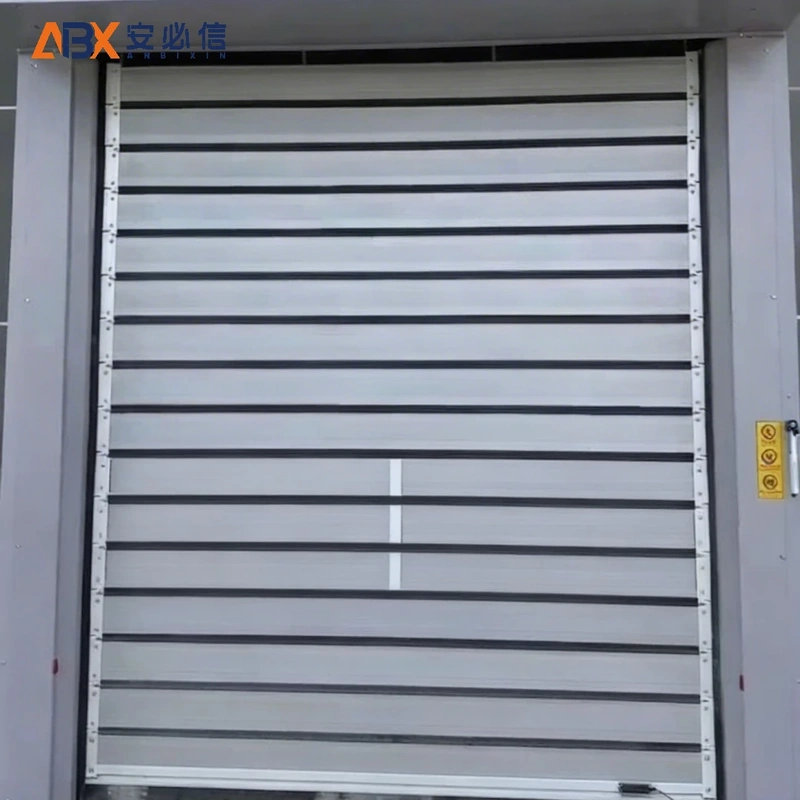
The Anbixin aluminum rapid door is designed specifically for industrial environments. It uses a high-strength aluminum alloy frame to ensure a robust and durable structure capable of withstanding long-term, high-frequency use. The door panel is made from a 40mm thick polyurethane foamed material, providing excellent thermal insulation and reducing energy consumption.
- Fast opening speed, typically completing in 2-5 seconds, significantly improving passage efficiency at the door zone
- Polyurethane foamed door panel, with superior insulation performance, reduces the exchange of cold and hot air, leading to significant energy savings
- Aluminum alloy frame, lightweight and high-strength, is corrosion-resistant and suitable for various harsh environments
Intelligent Control and Safety Features
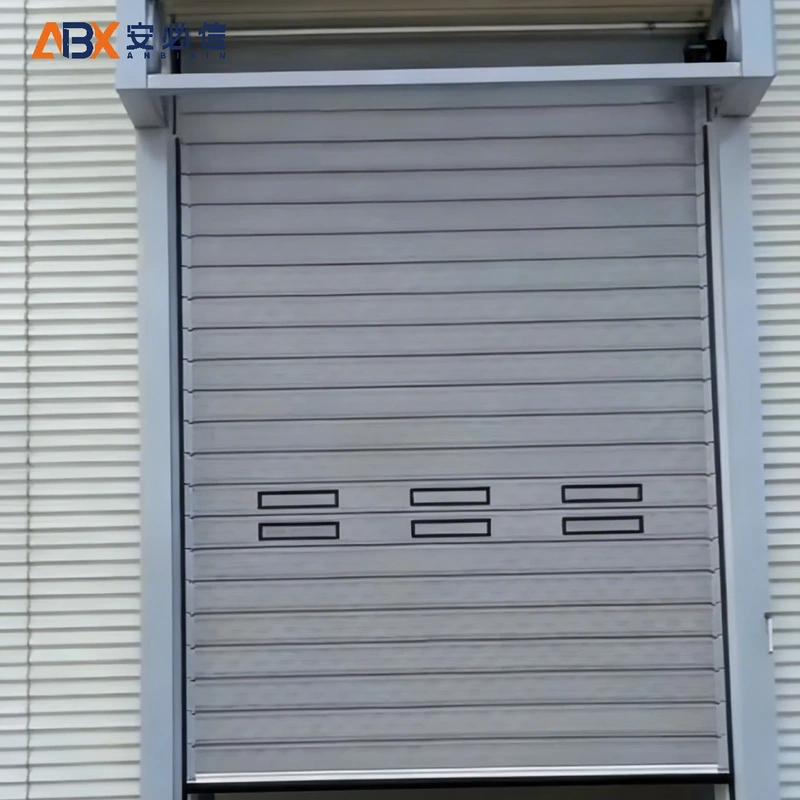
This product is equipped with an advanced control system that supports multiple control methods, such as buttons, sensors, and remote controls, to meet the needs of different scenarios. Safety features include anti-pinch functionality, photoelectric sensing systems, and bottom airbag sealing, ensuring safe and reliable operation and protecting personnel and items.
- Integrated anti-pinch function, the door will automatically stop or reverse when an obstacle is detected
- Photoelectric sensing system, which stops immediately when an obstacle is detected during the door opening process
- Bottom airbag sealing, ensuring a tight fit with the ground, effectively preventing the leakage of cold and hot air
Easy Installation and Maintenance
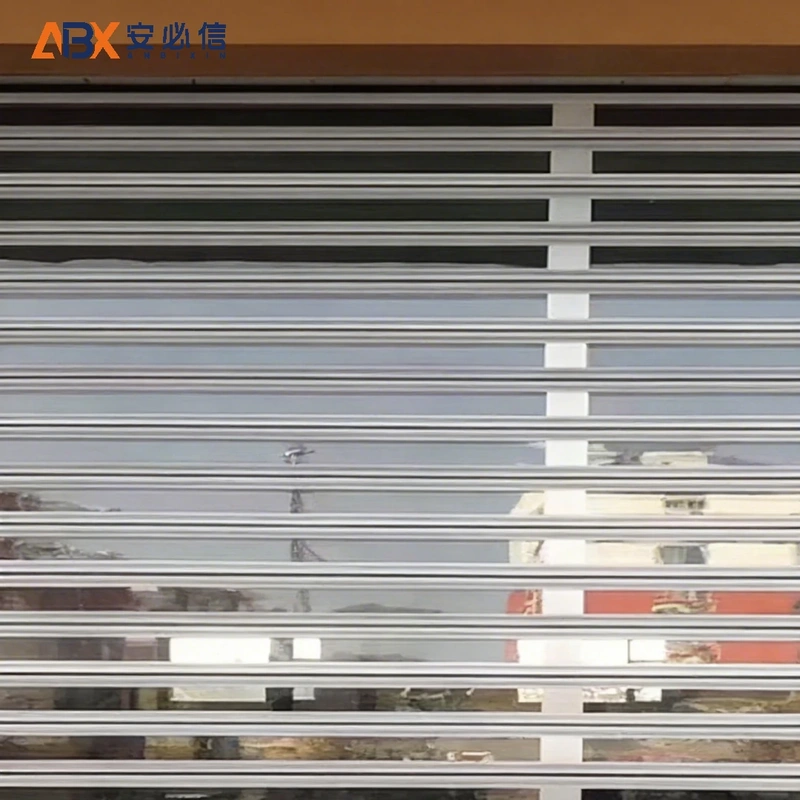
The Anbixin aluminum rapid door is easy to install and can be customized for size and opening direction according to on-site customer requirements. It uses a modular design, making it easy to maintain and replace parts. The door surface undergoes an anodized treatment, offering excellent corrosion resistance and an aesthetically pleasing appearance.
- Modular design, facilitates maintenance and replacement of parts
- Anodized treatment, corrosion-resistant and aesthetically pleasing, with a long service life
- Easy installation, customizable dimensions according to on-site requirements
Technical specifications
| Parameter | Typical value |
|---|
| Door panel thickness | 40 mm Polyurethane foamed |
| Opening speed | 2-5 seconds |
| Frame material | High-strength aluminum alloy |
| Sealing method | Bottom airbag sealing |
| Control method | Buttons, sensors, remote control, etc. |
| Surface treatment | Anodized |
Values are typical configuration ranges. Final selection depends on opening size, cycle duty and site conditions.
Installation and selection notes
This model belongs to the rigid high-speed doors family, where rigid slat construction is chosen where wind load, forced-entry resistance and thermal separation must coexist with frequent traffic. Verify the sealing arrangement at the bottom edge and the side guides. Review control interlocks with existing conveyors, airlocks or dock levellers.
Frequently asked questions
What is Aluminum High-Speed Door?
Aluminum High-Speed Door is a rigid high-speed door configuration. A rigid high-speed door is a powered industrial door built from rigid insulated slats that opens and closes at high speed, combining wind resistance, security and temperature separation at high-traffic openings.
Which parameters should be verified before selection?
Before ordering, verify door panel thickness, opening speed, frame material against the actual site conditions. Values on this page are typical ranges, not a substitute for a door schedule.
How does rigid high-speed door fit industrial facilities?
For industrial facilities, rigid slat construction is chosen where wind load, forced-entry resistance and thermal separation must coexist with frequent traffic. Confirm the final arrangement with the project door schedule and the site's safety requirements.
Standards and parameters to verify
When specifying rigid high-speed doors for industrial facilities, check the following against the project door schedule. The standards listed are the references normally used when reviewing an industrial door specification; they are not a certification claim for any specific installation.
| Reference | What to verify |
|---|
| EN 13241 | Product standard for industrial, commercial and garage doors and gates |
| EN 12424 | Wind resistance classification for the exposed elevation |
| EN 12425 | Resistance to water penetration |
| EN 12426 | Air permeability of the closed door |
| EN 12428 | Thermal transmittance where temperature separation is required |
| EN 12453 | Safety in use of power-operated doors |
| EN 12604 | Mechanical aspects of doors and gates |
| Typical operating speed | 0.5-1.2 m/s across models in this product family; confirm the required cycle time before selection. |
Compare the declared wind class with the building exposure and opening size. Final values depend on opening size, cycle duty and site conditions.